
Capturing Vladimir Cauchemar — Anthropology, a night behind the mask
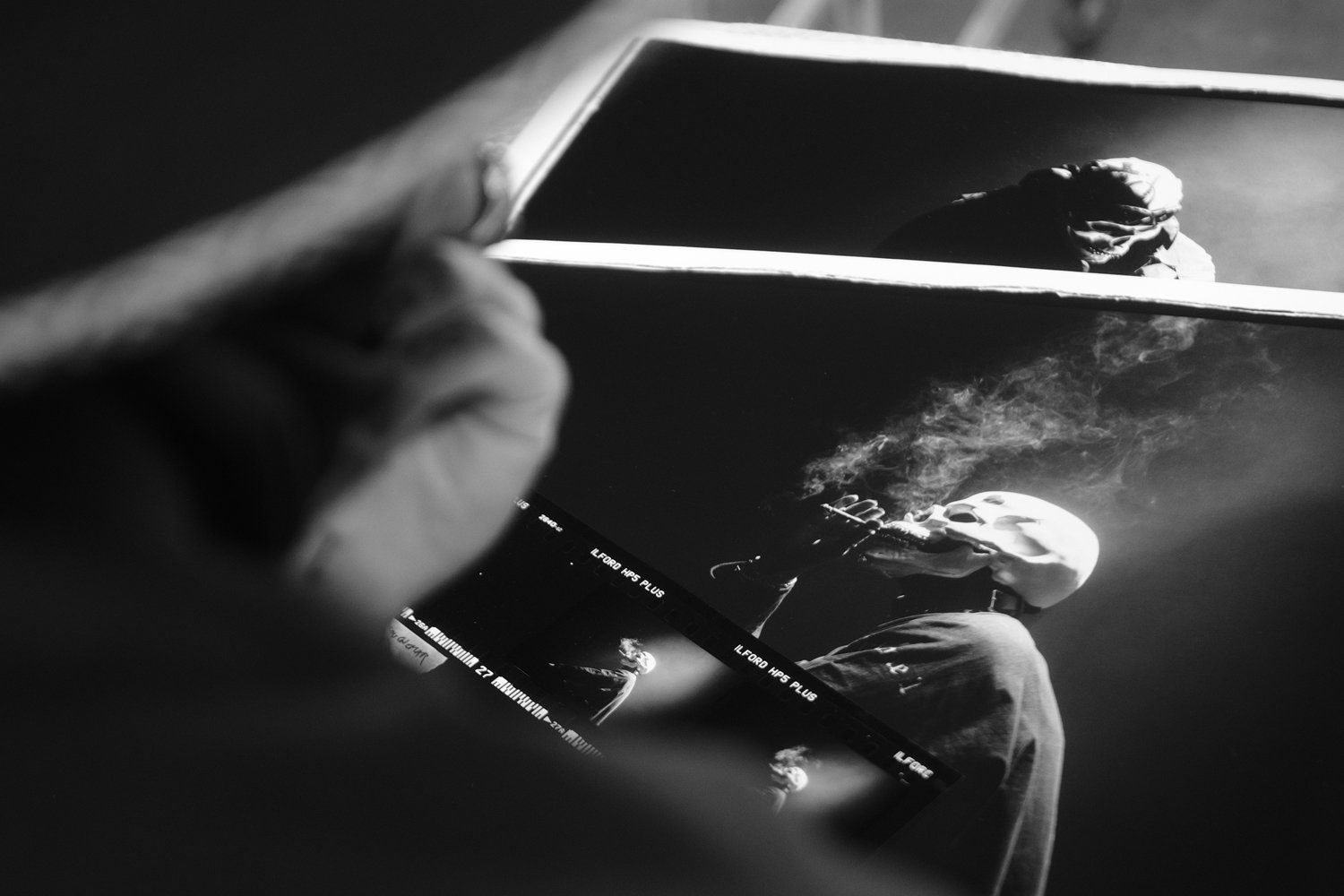
Some assignments are less about documenting a performance and more about entering an atmosphere. Photographing Vladimir Cauchemar during his final show Anthropology was exactly that kind of experience: a visual immersion into a world built on anonymity, symbolism, and raw musical intensity.
From the moment the lights dropped, the stage became something closer to a ritual space than a concert setting. Shadows, strobes, and dense fog sculpted the environment, revealing fragments rather than offering a complete picture. This constantly shifting visibility defined the photographic approach. Instead of trying to “show everything,” the goal was to follow the rhythm of appearance and disappearance, letting the imagery echo the mystery that defines the artist himself.
Working in this context required embracing contrast and imperfection. The lighting design moved from blinding flashes to near darkness within seconds, forcing instinctive decisions rather than controlled compositions. Each frame had to be anticipated, felt, almost guessed, aligning the act of photographing with the pulse of the music. The camera became less an observational tool and more a responsive instrument inside the performance.
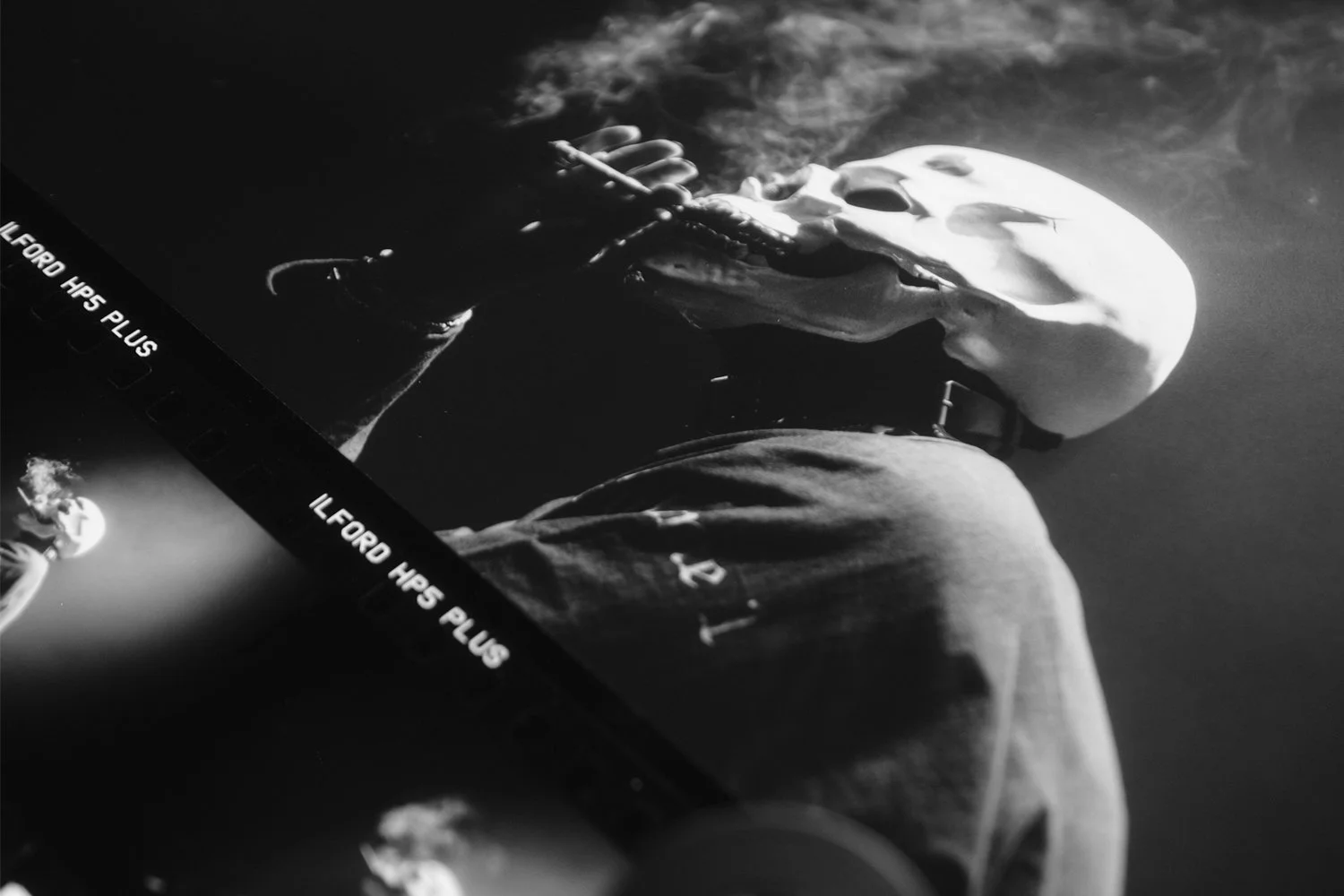
What makes this project particularly compelling is the tension between identity and concealment. The skeletal mask, instantly recognizable yet deliberately impersonal, transforms the performer into an icon rather than an individual. Photographing that presence meant focusing on gesture, posture, and energy rather than facial expression. The narrative emerges through movement, scale, and the interaction between sound, crowd, and scenography.
The Anthropology show also marked a sense of culmination. There was a perceptible weight to the evening, a feeling shared by the audience and carried through the visuals: hands reaching toward the stage, dense silhouettes suspended in haze, moments where the performer appeared almost statue-like before dissolving again into light. These fleeting transitions became central to the photographic story, emphasizing ephemerality over documentation.
Rather than producing straightforward concert imagery, this shoot aimed to translate a sensory experience into still form. Grain, deep blacks, and sharp highlights were preserved intentionally, maintaining the physicality of the moment instead of smoothing it into something overly polished. The result aligns with a documentary approach to live performance—images that retain the tension, noise, and unpredictability of being there.
Photographing Anthropology was ultimately about capturing traces: fragments of sound made visible, gestures caught between flashes, and the presence of an artist who communicates as much through absence as through performance. It was less a matter of recording a show than of preserving the atmosphere of a closing chapter.
© Luc Maker / Media Shape